


You open your Google Ads dashboard, and the conversions are climbing. The chart looks great. Then your sales team works the list, and the story falls apart. Half the phone numbers are dead. The emails bounce. “Mike Johnson” never answers, and the two leads who did pick up were asking about a service you don’t even offer.
If that sounds familiar, your account probably has a form spam problem. And in 2026, it is worse than ever, because the fake leads no longer look fake.
Google Ads runs on signals. Every time a form is filled out, and you count it as a conversion, the system treats that action as a win and looks for more people like the one who submitted it. When that submission came from a bot, you have just taught the algorithm to chase bots. Your conversion count rises, your cost per real customer rises with it, and your actual revenue stays flat.
This is the trap most advertisers miss. The number on the screen is not the number in your bank account.
A few years ago, spam leads were easy to spot. Names like “asdfgh,” emails that obviously bounced. Not anymore. Automated traffic now accounts for more than half of all web activity, and malicious bots make up roughly a third of it, with AI tools making them harder to detect than ever. Today’s bots use real-looking names, working email formats, and residential IP addresses that blend in with genuine customers. That means the old eyeball test fails. You cannot tell anymore just by reading the name.
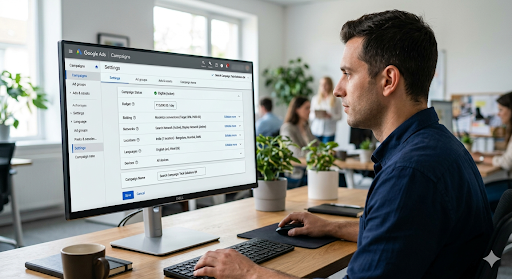
The source is usually hiding in your campaign settings.
Google Search Partners and Display placements
These networks run your ads across thousands of low-quality sites, and many of them are where junk form fills originate. Turning off Search Partners is often the single fastest fix.
Performance Max blind spots
Performance Max spreads spend across placements you cannot fully see. If your spam started right after launching a PMax campaign, pause it and watch what happens to your lead quality.
Click farms and competitor sabotage
Some bad leads are paid humans submitting junk to burn through a rival’s budget. It is petty, but real, and common in competitive local markets.
Look for the patterns, not the individual entry. A flood of submissions at 3 a.m., area codes that do not match the contact’s city, ten forms from the same IP range, or leads who never reply to a single follow-up. One odd lead is noise. A pattern is a problem.
Most accounts count page views, button clicks, and scroll depth as “primary” conversions. Strip it down so only real form submissions and calls count. This alone stops you from training Google on garbage.
Add friction that bots hate
ReCAPTCHA, hidden honeypot fields, and phone verification at the point of capture filter out most automated fills without annoying real visitors. Your landing page setup matters here as much as the ad itself.
Feed Google better signals
With enhanced and offline conversion tracking, you tell Google which leads actually became customers. The algorithm then optimizes toward buyers, not form-fillers. This is the work that separates a real Google Ads agency from someone just turning campaigns on.
Checking the account once a week isn’t enough anymore. By the time you spot a wave of fake submissions, Google has already counted them, adjusted your targeting, and spent real budget chasing more of the same. Spotting form spam now takes daily eyes on the account and exclusion lists that grow as new junk sources appear.
The bigger shift is how you measure success. Stop reporting on conversion counts, since those are exactly the numbers spam inflates. Track which leads actually answered the phone and became customers, and judge the campaign on that.
Form spam is not going away in 2026, but it is manageable when someone is actively watching your account and feeding the algorithm the right signals. If your conversions look great but your phone is not ringing with real buyers, that gap is fixable.
Let Couture Marketing Group clean up your Google Ads account so your budget reaches real buyers, not bots. Contact us today or call (806) 336-0532.
How do I know if my Google Ads leads are fake or real?
Watch for patterns instead of single entries. Submissions at odd hours, mismatched area codes, multiple forms from a single IP range, and leads that never respond to follow-up are strong signs of spam. Real leads usually reply and have contact details that check out.
Does turning off Google Search Partners stop form spam?
It often cuts a large chunk of it. Search Partners places your ads on thousands of third-party sites where junk fills are common. Turning it off and then watching your lead quality for a week or two is usually the fastest first test.
Will spam leads actually hurt my Google Ads performance over time?
Yes. When you count bot fills as conversions, Google optimizes to find more traffic like them. That raises your cost per real customer and pushes the campaign toward worse audiences, so bad data quietly compounds.
Why am I suddenly getting more spam leads than before?
A sudden spike usually traces back to a specific change: a new Performance Max campaign, Search Partners getting switched on, or your ads landing on low-quality placements. AI tools have also made bot submissions cheaper and harder to spot, so volumes have climbed across the board in 2026



Comments are closed